
How to Choose a Precision Machining Parts Supplier Online: A 30-Minute Quantity Screen
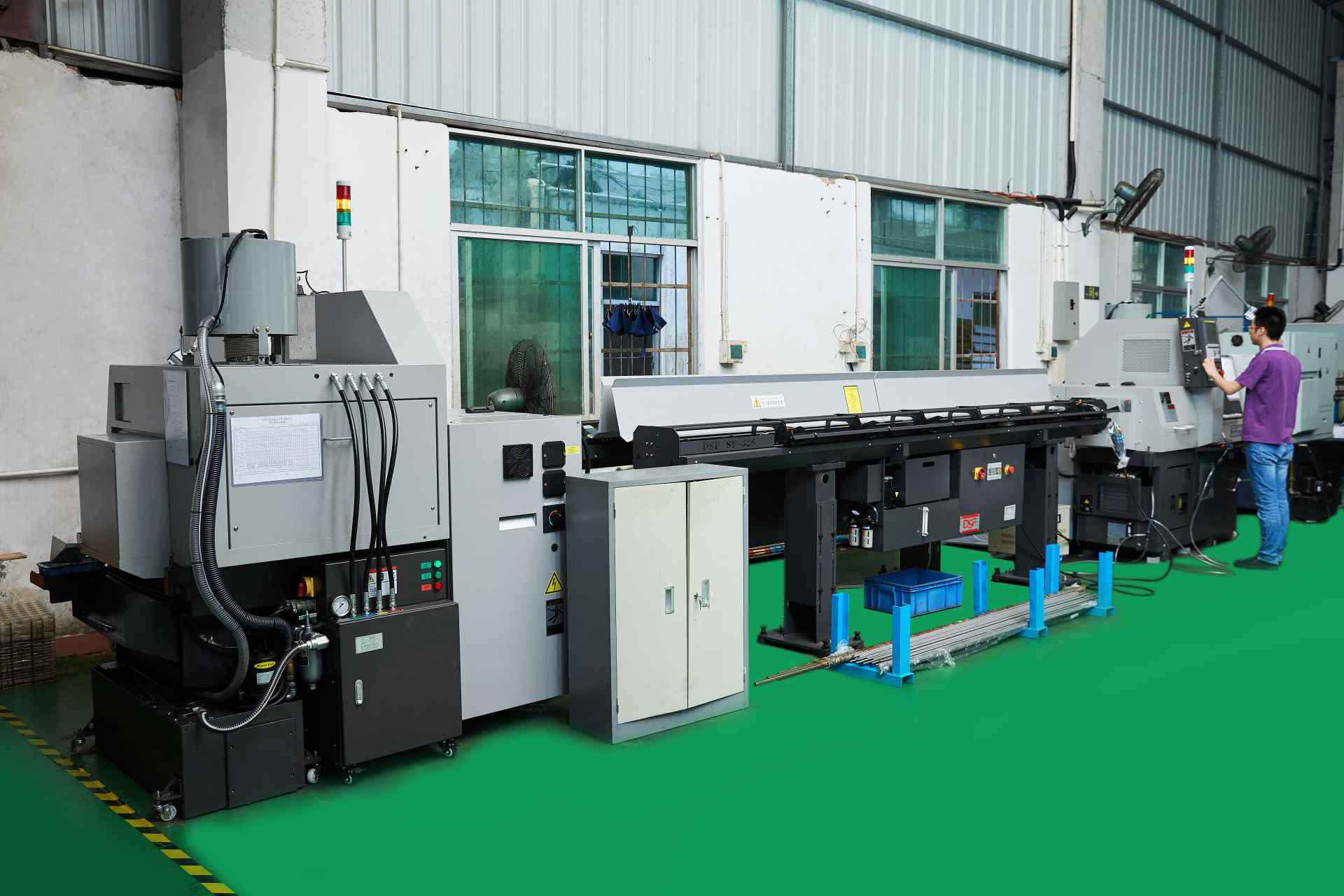
Most supplier screens ask the wrong question first. They open with capability — "can you machine this material, hold this tolerance, run this axis count?" — and every brochure answers yes. On precision machining parts, the question that actually separates one supplier from another is a quantity question: what happens to the unit price of your part as the order grows, and does the supplier understand why? The same drawing quoted at 5 pieces and at 5,000 pieces can differ in unit price by a factor of several, and the entire gap is setup cost being spread across more parts. A supplier who sees your part only as a single price has not thought about your quantity at all. This guide is a 30-minute screen built on the quantity curve — a timed set of probes that tests whether a supplier can show you where your price drops, why it drops there, and what it would change to move the drop earlier.
Why does the quantity question come before the capability question on a precision parts order?
A precision machining parts quote is two piles of money, and the split between them decides everything. The first pile is the one-time work: programming, tooling, fixturing, and first-article inspection, paid once per order no matter how many parts you buy. The second pile is the recurring work: material, machining minutes, finishing, and inspection per piece. A supplier who cannot separate those two piles in its own head cannot tell you why the unit price changes with quantity, and a buyer who cannot see the split cannot tell whether the price will behave correctly as volume grows.
That is why the screen starts with quantity rather than capability. Capability questions get answered from a website; quantity questions get answered from a cost model. Ask a supplier whether it can hold ±0.003 mm and you will receive an affirmation that took no thought to produce. Ask it what changes between a 10-piece order and a 500-piece order of the same part and you force it to reveal how it thinks about setup, routing, and volume — the three things that actually decide what precision parts cost. This site's own precision machining parts guide walks the full quantity-cost-curve model in detail; the screen below is the buyer-side version, the timed way to test any supplier against that same model.
Thirty minutes is enough because the screen is not an audit. It is a filter: it separates suppliers who think in quantity curves from suppliers who quote per-part prices, so that the shortlist you take into a deeper audit is already small.
Which one question does the most work in the first five minutes?
Send the same drawing to the supplier with a two-quantity request: a unit price at 50 pieces and a unit price at 500 pieces, nothing else. That single email does more screening work in five minutes than an hour of brochure reading, because the two numbers it produces carry the supplier's entire cost model inside them.
Read what comes back against the quantity curve. A supplier that understands setup economics will quote a meaningful drop between 50 and 500 pieces — the first small batch absorbs the setup cost as a per-part charge, and the larger order spreads the same fixed work across more units. A quote that barely moves between the two quantities is a signal that the process has not been thought through for volume, or that the supplier is not passing the savings on. The size of the drop, not the absolute numbers, is the signal: it tells you whether the supplier sees the fixed-versus-variable split in your part, and that is the single most informative thing a supplier can show you before you commit.
Two responses deserve immediate attention. A supplier that answers the two-quantity question with a real price ladder — and explains the steps in the curve — is pricing a process. A supplier that answers with a single number, a range, or a counter-question about "how many you are really going to order" is either quoting spare capacity or protecting a margin, and neither is a sign of a process thinker. The quality of the two-quantity answer is the screen's first gate.
What does the machine ladder tell you that a machine count never can?
Every factory page lists machines; the number matters far less than how the machines are organized. A serious facility runs a machine ladder — general-purpose 3-axis machines for prototypes and simple parts, 4-axis machines for multi-sided work, simultaneous 5-axis centers for complex geometry in one setup, bar-fed lathes for round parts at volume, and grinders for the finishing passes that take a surface to ±0.002 mm. The question for the screen is not how many machines the supplier owns. It is whether the supplier can name the rung your part would be routed to, and why.
The factory behind this site runs an 100+ machine ladder across a 6,800 m² floor: 50+ 3-axis machining centers, 20+ 4-axis, 20+ 5-axis, 25+ turning and mill-turn machines, and 7+ precision grinders, with 20+ inspection instruments behind them. That layout exists for a reason that matters to your quote: the savings in precision machining come from routing, not from raw capacity. A round part routed to a bar-fed lathe carries the economics of a bar-fed lathe; a complex housing routed to a 5-axis center is machined in one clamping instead of several. A factory that can say "your part goes to this rung and here is why" is showing you the cost model; a supplier that can only say "we have machines" is not.
Ask the routing question directly during the screen. If the supplier names a machine class and a reason — geometry, axis count, quantity — it is thinking about your part on the curve. If it answers with capacity or availability ("we can handle it"), it is thinking about filling idle time, and the quote will carry whatever cost that idle machine imposes.
Which three behaviors separate a quantity-aware supplier from a price-taker?
Once the two-quantity probe is out, three behaviors tell you which side of that line the supplier sits on. They are not about the size of the numbers; they are about whether the supplier reasons about the shape of the curve.
- It can name the steps in your curve. The quantity cost curve drops in recognizable steps. The first and largest drop happens between one piece and the first small batch, when setup cost stops being a per-part charge. The second drop comes when the process is stable enough to run unattended — bar stock feeding the machine, a pallet of blanks running between tending cycles. A supplier that can point at those steps in its own quote understands your volume before you explain it.
- It separates prototype price from production price without being asked. The first article is a different product from the production part: it carries programming, tooling, workholding, and first-article inspection all on one unit. A quantity-aware supplier shows a break-even point rather than expecting the prototype price to carry into volume, and rather than hiding the one-off cost inside a "sample fee" that never gets explained.
- It asks about your quantity before it asks about your tolerance. A supplier that opens with "what is your annual volume, and does this quantity stay stable?" is pricing a process. A supplier that opens with "how tight is the tolerance?" and never returns to quantity is pricing a single part, and the single-part price is the least useful number a precision parts buyer can receive.
These three behaviors are observable in a single email exchange. You do not need a site visit to see them; you need to ask questions that force the supplier to show its cost model instead of its brochure.
What should you verify in the next ten minutes, after the quantity answers look right?
When the quantity answers clear the first gate, the screen moves to verification, not of capability claims, but of the cost model the supplier just showed you. Four checks fit inside ten minutes and each one guards a specific way a price curve can be a mirage:
- Certificates with numbers, not logos. A real quality system publishes certificate numbers — ISO 9001:2015 (116024/A/0001/UK/En), IATF 16949:2016 (product design excluded) (131941/A/0001/SM/En), ISO 14001:2015 (116024/B/0001/UK/En) — that you can check with the registrar. A certificate number is a fact; a logo is a graphic. Ask for the number, then spend two minutes verifying it.
- Measurement evidence behind the tolerance claim. When the supplier quotes a tight tolerance, ask for a CMM report or an SPC chart from a real job — a sample showing measured values, the instrument, the date, and the inspector. A supplier that produces this on request is running the process the price assumes; one that promises it "with the shipment" is quoting a hope.
- Incoming material verification. Ask whether material is verified against its mill certificate at receiving — an XRF check that the alloy you specified is the alloy being cut. On precision parts, a wrong alloy looks identical to the right one and fails only in service; the screen checks that the supplier has a gate, not a belief.
- A stated inspection and documentation set. Ask which inspection is included in the quoted price and which is extra — first-article reports, dimensional reports, material certificates. A supplier that names the included set is pricing a controlled process; one that treats documentation as a surprise add-on has left quality to be negotiated after the parts exist.
The factory behind this site passes these checks by design — XRF at incoming inspection, CMM verification on critical features, SPC with Cpk on key characteristics, and the certificate numbers published on its own pages. But the screen is not about this factory. It is a set of probes you run against any supplier, and the discipline is to run them the same way every time so the answers are comparable.
How do you read the supplier's engineering response in the final ten minutes?
The last block of the screen tests the part of the supplier no brochure can fake: how its engineers respond to your actual drawing. Send the same RFQ to the two or three suppliers that survived the quantity and verification gates, and read the replies as data rather than as courtesy.
A quantity-aware supplier reads the drawing against its cost model. It asks what the part does, which features are functional, which tolerance band is real and which is a habit, what the annual volume looks like and whether it is stable. It may propose a corner-radius change that lets one tool do the work, a tolerance relaxation on a surface that carries no function, or a stock-size change that removes waste. Each of those suggestions is a signal that the supplier is reading your part the way a process engineer reads it — as a set of decisions that produce cost, not as a static object to be priced.
A supplier that replies with a number and no questions is not being efficient; it is quoting without understanding, and the quote will be padded to cover every question it did not ask. A supplier that answers the engineering questions with named machines, named process steps, and a stated first-article plan is showing the routing behind its price. Compare the three replies on the quality of the engineering response, not on the numbers alone. The cheapest quote from a shop that did not read the drawing is the most expensive quote you will ever receive: the gap between the quoted part and the real part shows up as rework, inspection failures, and a launch date that slips.
The engineering-response test also closes the quantity loop. A supplier that asked about volume in the first email and then prices the RFQ with the volume-dependent steps visible — the setup drop, the automation drop — is the same supplier all the way through the screen. Consistency between the quantity answers, the verification evidence, and the engineering response is the strongest single signal the 30 minutes can produce. For the deeper checks behind the screen, the factory's own quality control process explains how precision parts are measured and documented, and the precision machining parts factory page shows the machine ladder and the verification equipment behind a quantity-aware quote.
Frequently Asked Questions
Why does the unit price drop so much between 50 and 500 pieces?
Because the setup cost — programming, tooling, fixturing, first-article inspection — is paid once per order, and a larger order spreads the same fixed work across more parts. The first part absorbs the whole setup cost alone; at 500 pieces the fixed share has nearly disappeared and the price is mostly material and machining minutes. The size of the drop between two quantities is a direct read on how the supplier thinks about that split.
Should I compare suppliers on unit price at a single quantity?
No. A single-quantity price hides the supplier's cost model. Compare the same drawing at two quantities — say 50 and 500 pieces — and read the shape of the curve each supplier produces. The supplier whose price drops in a way it can explain is pricing a process; the one whose price barely moves is either not passing volume savings on or has not planned its process for volume.
Do I need a full factory audit before my first order?
Not for a first small order. The 30-minute screen — a two-quantity quote, a routing question, certificate numbers, measurement evidence, and an engineering response — is the lightweight version of the same audit. It surfaces the same information a site visit would, because a supplier who cannot answer the quantity questions in writing almost certainly cannot satisfy them on the floor either. Save the deep audit for the supplier that wins the screen.
What is a reasonable drop between a prototype price and a production price?
There is no honest flat number — the drop depends on how much one-time work your part carries. The point is that the drop should exist and the supplier should be able to explain it. A part with heavy programming and fixturing will drop sharply between one piece and the first batch; a simple part with light setup drops less. What matters is that the supplier shows the break-even rather than expecting the prototype price to carry into volume.
What does "MOQ 1 piece" actually mean for a buyer?
It means the factory will machine a single prototype under the same quality system that later runs your production — incoming material verification, first-article inspection, CMM and SPC where the drawing demands them. You can prove a design before committing to volume, and the prototype and the production run can share the same process knowledge instead of being handed between two shops.
How do I know a supplier's tolerance claim is real before I order?
Ask for measurement evidence from a real job: a CMM report or SPC chart with measured values, the instrument used, the date, and the inspector. Real tolerances leave real records, and a supplier that produces a sample on request is running the process the price assumes. A tolerance claim without a record behind it is a sentence, not a capability.
What should I send to get a two-quantity quote that means something?
Send the 3D model or a toleranced 2D drawing, the material with its condition, and the two quantities you want priced. Add a note on what the part does — a supplier that knows whether a feature is functional can tell you which tolerance to hold and which to relax, and that reading is part of what you are screening for.
Want to see how a quantity-aware supplier reads your drawing before you commit to a run?
Send the model, the material, and your two target quantities to [email protected] or call +86 13126536955. You will get back a price ladder with the steps in the curve named, not a single number.