
Precision Machining Parts Factory
The reason to keep prototype and production in one facility is continuity. The prototype that proves your geometry becomes the reference the production process is held against, and the people who learned your part during prototyping are the same people who run it in volume. That continuity is worth real money, because it means the lessons of the first article are not lost when the job is handed from one shop to another.
The facility is laid out for this. The machining floor covers the metal-cutting range — milling, turning, mill-turn, grinding — so most parts move between operations inside one building rather than traveling between vendors. Secondary processes such as anodizing, plating, powder coating, and heat treatment are bundled through qualified partners where they are not in-house, and the factory states which is which rather than blurring the line.
What inspection capacity backs every quantity tier?
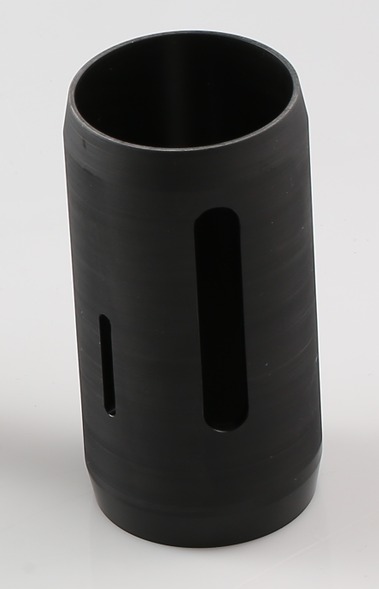
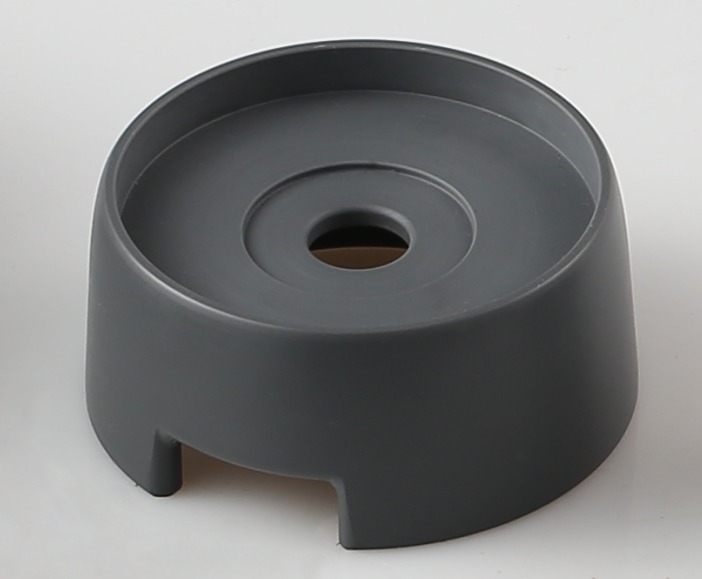
Inspection is the other half of the ladder. Alongside the 100+ production machines sit 20+ inspection instruments, and the two are matched: a factory that can cut to ±0.003 mm (milling) / ±0.002 mm (turning) is only as credible as its ability to measure it. The inspection bench includes Hexagon GLOBAL S coordinate measuring machines, vision measuring machines, a laser microscope, surface roughness and profile instruments, and an XRF spectrometer for verifying incoming material against its mill certificate.
The inspection strategy scales with the order — full first article on a prototype, interval sampling on a batch, SPC on a long run — and the same instruments serve all three. That is what lets the factory price quality honestly at every quantity instead of charging for 100% inspection where sampling is the right tool.
Why does location matter for part economics?
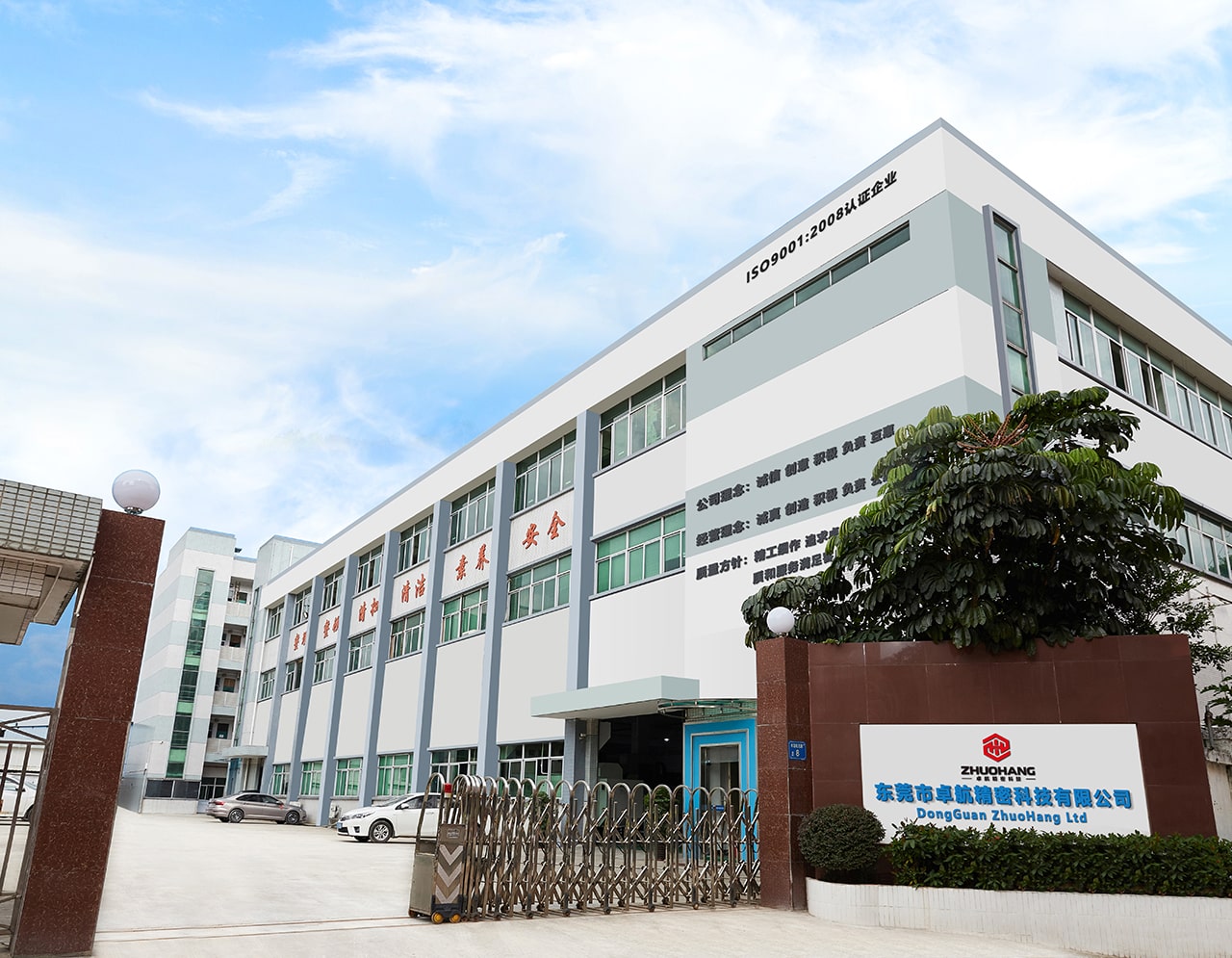
The factory's location in Dongguan is an economic fact, not a slogan. The Pearl River Delta concentrates the suppliers a machining factory depends on — raw material, tooling, plating, heat treatment, and freight — within reach, which shortens the supply chain around every part. For you, that translates into two things: faster turnaround on the processes that are outsourced, and a shorter path for finished parts to reach a port.
Location also means you can visit. A factory that invites audit and can be reached in person is a different proposition from one that exists only as a website. The address — No. 8, Shuibian Songyuan Road, Hengli Town, Dongguan, Guangdong, China 523470 — is on the page for exactly that reason.
What are the certifications and company facts?

Certifications are the factory's cheapest pre-audit, and the numbers are published so you can verify them with the registrar rather than take a logo on trust.
| Standard | Certificate number | Scope |
|---|---|---|
| ISO 9001:2015 | 116024/A/0001/UK/En | Machining of metal parts |
| IATF 16949:2016 | 131941/A/0001/SM/En | Manufacture of CNC metal machining parts (excludes product design, Clause 8.3) |
| ISO 14001:2015 | 116024/B/0001/UK/En | Environmental management related to machining of metal parts |
Honest scope note: the IATF 16949 certificate excludes product design under Clause 8.3. This is a build-to-print manufacturer — if you need design ownership, you should raise it up front so the scope is set correctly, rather than discovering the boundary later.
How does the workforce's skill mix affect the cost curve?
People are the part of the quantity cost curve that machines cannot replace, and their value is highest exactly where the curve is steepest — at low volume. A prototype is built by a technician who reads a drawing, plans a setup, watches the first cut, and corrects drift before it becomes scrap. That is skilled labor doing one-time work, and it is why the first part is expensive. At production volume, the process is proven and the machine runs on its own, so the recurring labor cost per part falls, which is the human half of the same curve the machines follow.
This is why the workforce number matters more than the headcount. A floor where more than 80% of the staff are skilled technicians, and a large share have five to ten years on the floor, can build a process correctly the first time instead of by trial and error. That skill shortens the prototype loop and reduces the scrap that trial-and-error would generate, which is a real cost saving that never shows up as a line item but lands directly in the unit price. A buyer asking about a factory should ask about the floor's experience the same way they ask about the machine list — both are what produce the tolerance.
What machine brands and capabilities sit on the floor?
Machine brand is not decoration; it is a proxy for the reliability that unattended running demands. A lights-out shift is only safe if the machine holds tolerance hour after hour without an operator correcting it, and that is exactly the property that differentiates machine builders. The factory's ladder is built on machining centers and turning equipment chosen for that reliability rather than for brochure features.
| Machine builder | Role on the floor | Where it sits on the quantity curve |
|---|---|---|
| Brother | High-speed machining centers | Fast changeover for small-to-mid batches |
| Mazak | Multi-axis and mill-turn centers | Complex geometry finished in one clamping |
| TSUGAMI | Swiss-type and sliding-head lathes | Long, bar-fed runs through the night |
| Citizen / Star | Swiss-type turning | Small, high-precision round parts at volume |
| Sodick | Precision grinding and EDM | The tightest tolerances and finest finishes |
The point of naming the builders is the same as naming the machine count: it lets a buyer verify that the right equipment exists for their part before discussing price. A shop that can name its machine builders and counts is describing a floor it actually runs; one that cannot is describing a floor it found in a brochure. The brand list is not the product, but it is the evidence that the capability claim has a physical machine behind it.
What this shop actually runs
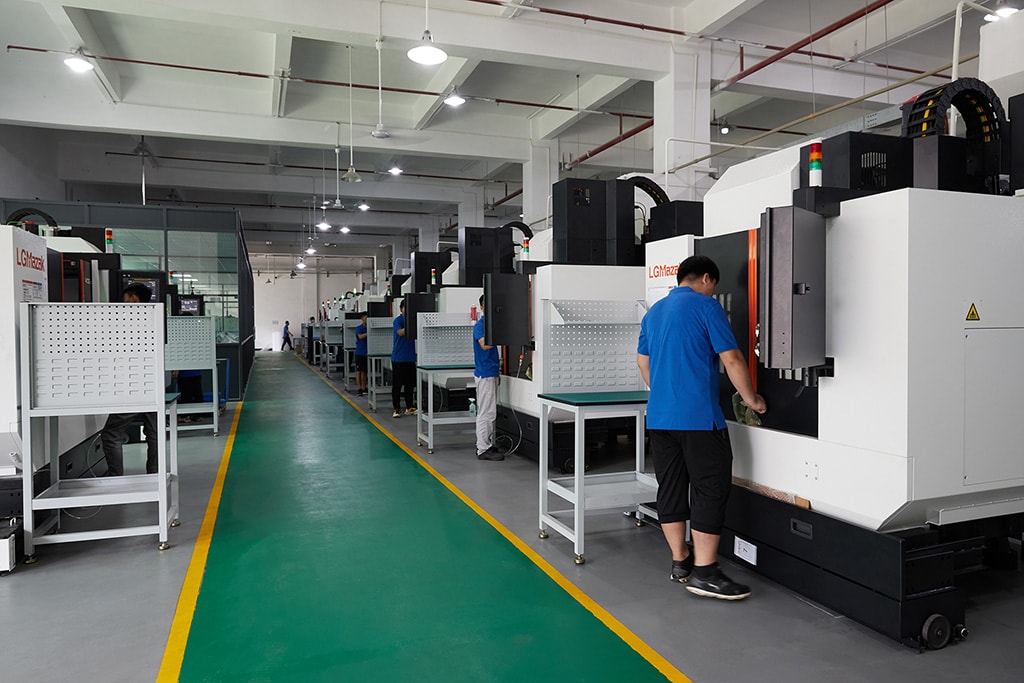
Capability evidence should come as specifics, not slogans. Behind this guide is a 6,800 m2 plant in Dongguan, China running 100+ CNC machines with 100+ staff. The machine list by category:
- 5-axis machining centres (10+) - Mazak VARIAXIS I-600 (510/910/510 mm travel, 12,000 rpm, 22 kW, 71.6 N·m, 30-tool BT40) and Mazak INTEGREX I-250H S (B-axis 0.0001°, 24 kW, 124 N·m, 38-tool HSK-A63). Specified for compound-angle parts, single-setup multi-face prismatic work, and aerospace fittings where datum transfer loss is unacceptable.
- 3-axis / 4-axis machining centres (50+) - Brother SPEEDIO S500Z2N / S700Z2N (10,000 rpm, 14/21-tool ATC, 0.7 s tool-to-tool, Z-axis 2.2 G) and Mazak VCE-430A L / VCE-570C L (10,000 rpm, 118 N·m, 24-tool ATC). Specified for prismatic parts, plates, brackets, housings.
- Swiss-type turning centres (10+) - Citizen Cincom A20-3F7 (Φ20 mm, 10,000 rpm), TSUGAMI B0206-III / B0205-III (Φ20 mm, 0.1 µm), STAR SR-32JII / SR-32J Type N (Φ32 mm, 8,000 rpm). Specified for long, slender rotational parts at ±0.002 mm.
- CNC turning centres (20+) - HEADMAN T70M/1250 (720 mm swing, 117 mm bore, 3,000 rpm, BMT75 12-station turret). Specified for shafts, bushings, flanges up to ±0.002 mm.
- Wire EDM (5+) - Sodick AQ535L (550/350/300 mm travel, ±20° taper, 800 kg workpiece). Specified for hardened tool steel, internal splines, sharp internal corners that milling cannot reach.
- Inspection: Hexagon CMM + 20+ gauges - Hexagon CMM for coordinate measurement, plus vision system, profilometer, hardness tester, coating thickness gauge, XRF for material verification. The 10:1 rule (gauge 10x more accurate than the band) is applied to every feature.
- Machine highlights - VARIAXIS I-600: one-setup multi-face 5-axis + MAZA-CHECK auto-calibration; INTEGREX I-250H S: DONE-IN-ONE mill-turn, B-axis 0.0001° + Ai thermal shield; SPEEDIO S500Z2N / S700Z2N: Z-axis 2.2 G + 0.7 s ATC; Swiss-type: guide-bush switchable + 0.1 µm resolution.
Tolerance: ±0.003 mm CNC milling / ±0.002 mm CNC turning / ±0.002 mm grinding and wire EDM. Capability: Ppk >= 1.67 initial on key characteristics, Cpk >= 1.33 ongoing.
Certificates: ISO 9001:2015 (116024/A/0001/UK/En), IATF 16949:2016 (131941/A/0001/SM/En, with design clause 8.3 excluded, stated openly) and ISO 14001:2015 (116024/B/0001/UK/En), issued to Dongguan Zhuohang Ltd, registration 91441900MA4UWT6X39, founded 2005.
Where we ship: Austria, Belgium, the Czech Republic, Denmark, France, Germany, Greece, Hungary, Ireland, Italy, the Netherlands, Spain, Sweden and the United Kingdom in Europe; Brazil, Canada, Mexico and the United States in the Americas; China, Israel, Japan, Singapore and Sri Lanka in Asia; Australia and New Zealand in Oceania; and South Africa in Africa — plus other countries and regions worldwide, shipped from our base in Dongguan, China.
Contact: Felipe Iglesias, [email protected], +86 13126536955.
Want to see the factory for yourself?
Email [email protected] or call +86 13126536955 to arrange a visit, audit, or quote.
Frequently Asked Questions
Who is the factory behind Precision Machining Parts?
In short, The factory is Dongguan Zhuohang Ltd, operating as Zhuohang Precision Machining Factory, founded in 2005 in Hengli Town, Dongguan, Guangdong. It runs a 6,800 m² facility with more than 100 employees and over 80 production machines.
How many machines does the factory run?
The factory runs 100+ production machines — 3-axis (50+), 4-axis (20+), and 5-axis (20+) milling, 25+ CNC lathes, and 7+ precision grinders — plus 20+ inspection instruments including Hexagon CMMs.
What is the factory's MOQ?
The MOQ is 1 piece. The same facility takes single prototypes, short validation runs, and full production, so you can qualify a part before committing to volume.
What certifications does the factory hold?
ISO 9001:2015 (116024/A/0001/UK/En), IATF 16949:2016 (131941/A/0001/SM/En), and ISO 14001:2015 (116024/B/0001/UK/En). The IATF 16949 scope excludes product design under Clause 8.3.
Where is the factory located?
No. 8, Shuibian Songyuan Road, Hengli Town, Dongguan, Guangdong, China 523470 — in the Dongguan manufacturing region of the Pearl River Delta.
How large is the facility and workforce?
The facility covers 6,800 m² and employs more than 100 people, with over 80% skilled technicians and a large share of staff with five to ten years on the floor.
Can I visit or audit the factory?
Yes. Factory visits and audits are welcome. Contact [email protected] or call +86 13126536955 to arrange a visit and see the machine list and quality system in person.
What machine brands does the factory run?
In short, The floor is built on Brother high-speed machining centers, Mazak multi-axis and mill-turn centers, TSUGAMI Swiss-type lathes, Citizen and Star turning equipment, and Sodick grinding and EDM — chosen for the reliability that unattended running requires, not for brochure features.
How does the workforce affect unit cost?
In short, Skilled technicians matter most at low volume, where a prototype is built by someone who plans the setup, watches the first cut, and corrects drift before it becomes scrap. At production volume the proven process runs on its own, so recurring labor per part falls — the human half of the same curve the machines follow.
Continue reading: Precision Machining Parts · Precision Machining Parts Services · Zhuohang Precision Machining Factory
Standards referenced on this page
- ASTM A582/A582M-12 — Standard Specification for Free-Machining Stainless Steel Bars
- ISO 14001 — Environmental management systems — Requirements with guidance for use
- ASTM E8/E8M-21 — Standard Test Methods for Tension Testing of Metallic Materials