
Precision Machining Parts Lead Times: What Drives Them and How to Plan the Date
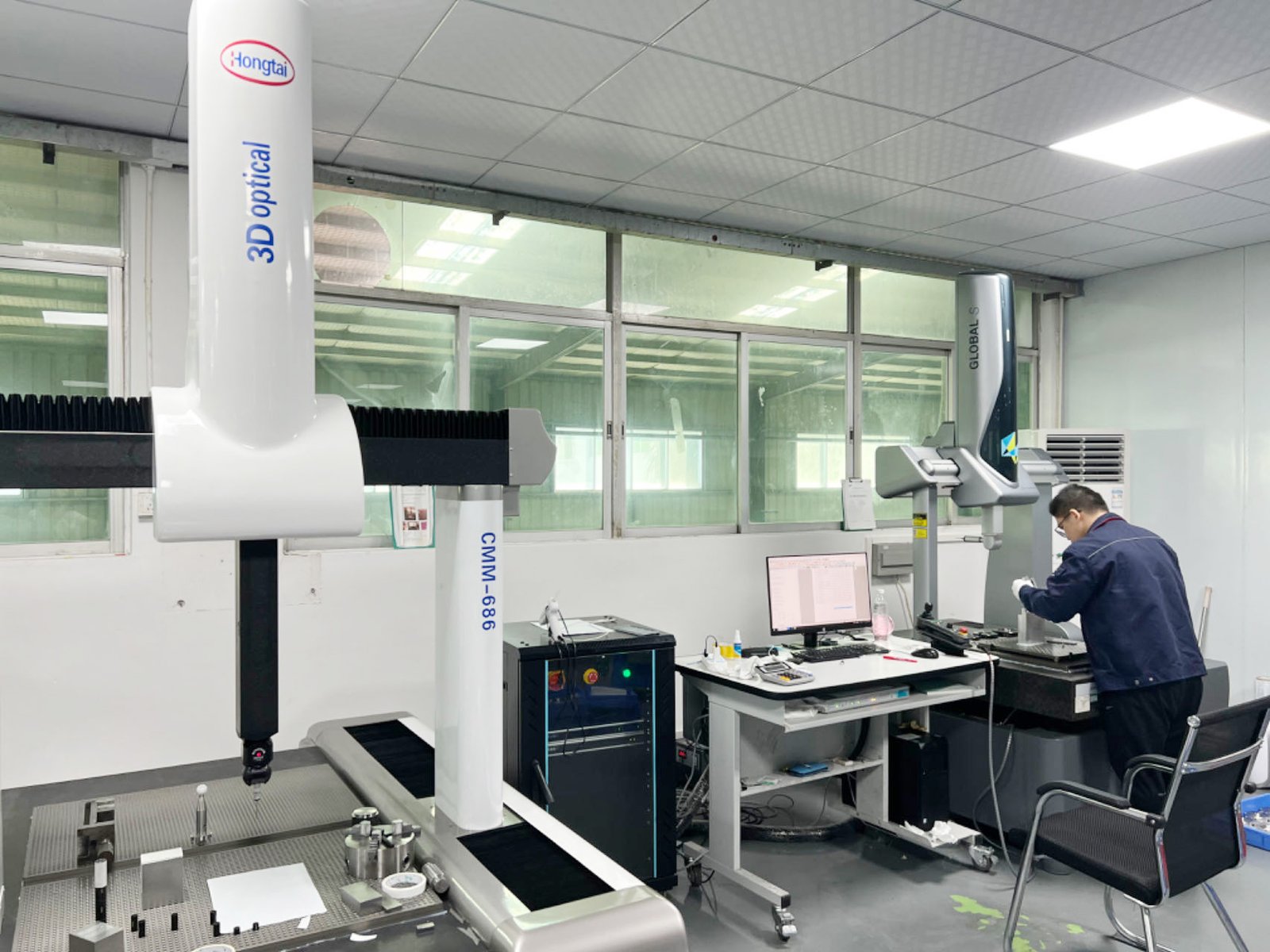
A lead time for precision machining parts is not one number. It is a curve that runs the opposite way from the price curve, and the buyers who plan best are the ones who read both at once. This guide explains what actually consumes the days between your RFQ and the shipment, why a thirty-day tier can be the most honest date on a quote, and how to lock in a delivery date you can build a schedule around.
Why does a quoted lead time depend more on the drawing than on the calendar?
Lead time is set by the routing, and the routing is set by the drawing. A precision machining parts quote is really a description of an ordered list of operations — material prep, machining, any secondary process, inspection, packing. Every operation on that list is a separate event with its own setup, its own queue, and its own wait. That is why two parts of identical size can quote at completely different dates: the simple one takes one setup and one material, and the complex one passes through a dozen operations, each adding days.
The drawing decides how long that list is. A part specified in one material grade with a general tolerance block and no finishing is a short route. The same geometry with a tight tolerance on a functional bore, a specified surface finish, and an anodized finish becomes a longer route, because each of those callouts forces a process step and a verification step. Nothing about the calendar changed — the number of steps did. When a shop answers "it depends," it is describing the routing, not dodging the question.
For a buyer, the useful question is not "how fast can you go?" but "what does my drawing imply about the route?" A design-for-manufacturing review before quoting does exactly that: it reads the drawing, names the operations, and gives you a date that comes from the route rather than from a sales target. That review is part of the quoting process at this factory, which is why a complete RFQ usually comes back with a quantity-break quote within one business day.
Where does the time actually go between your RFQ and the shipment?
Between the moment you send a drawing and the moment parts reach your dock, the calendar divides into a small number of stages. Naming them lets you see which one is eating your date:
- The RFQ exchange. A complete package — a STEP model or a toleranced 2D drawing, the exact material grade, the quantities you care about, and any surface finish — lets the factory do the design-for-manufacturing review immediately. A vague drawing generates questions, and every round of questions costs a day before production has even started.
- Material. Incoming bar or plate is verified against the mill certificate before machining begins, so the alloy you specified is the alloy that reaches the machine. The verification is quick for standard grades held in stock; it becomes a supplier-side wait when a grade has to be ordered in.
- The machining run. This is the stage people picture — chips flying — and it is often the shortest part of the calendar. Once programmed and set up, a batch may occupy a machine for hours while the routing around it takes days.
- Secondary processes. Surface finishing, heat treatment, and grinding each add their own queue and setup on top of machining. These are the steps that most often push a part into a longer lead-time tier.
- First-article inspection. The first part is measured against the drawing before the run is released. On a one-piece order this is a full dimensional check; on a production run it becomes the baseline every later part is compared with.
- Packing and freight. Inspection reports and packing happen after the last operation, and the freight leg then runs from the factory to your door on its own timetable.
The readout for planning: on most orders the longest wait is not the cutting. It is the queue in front of a process step, and on finished parts it is usually the finishing queue. Ask which step owns the longest wait, and you will hear where your real lead time lives.
Which precision machining parts fall into the 3-day, 7-day, and 30-day tiers?
Precision machining lead times cluster into three honest tiers, and the boundary between them is set by the drawing rather than by the size of the order:
- Simple — roughly 3 days. Few operations, a single material, no finishing. A one-setup milled or turned part from standard stock is the classic case.
- Standard — roughly 7 days. Multiple operations at standard tolerances. The part moves through a couple of setups or machines, but nothing runs through an external process.
- Complex — roughly 30 days. Ten to twenty process steps, or any surface finishing or heat treatment. This is the tier where anodizing, plating, or a heat-treatment cycle enters the calendar, and where the date stops being a simple count of machine days.
The 30-day tier is not a penalty. It is the honest length of a part that must pass through several operations and at least one secondary process with a queue of its own. A supplier who quotes a complex finished part in a week is usually quoting the machining leg and leaving the rest of the route unspoken. The tier system exists so the date on the quote means the whole route, from drawing to shipment.
This is why the quantity connection matters. A prototype of a complex part — ten to twenty steps, anodized — needs the same route as the production version, so it lands in the same longer tier. The MOQ here is one piece, which means you can qualify that complex design with a single prototype before committing a thirty-day production window to it. Discovering a problem on the prototype is far cheaper than discovering it halfway through a thirty-day run.
Why do surface finishing and heat treatment add a second clock?
Surface finishing is the biggest single reason a precision machining parts order moves from a one-week tier to a month. The machining itself may be finished in days; the finish is a separate clock. Anodizing, plating, powder coating, and heat treatment are batch processes that run on schedules of their own, and they usually sit with qualified partner facilities rather than on the same floor as the cutting tools.
Three things about a secondary process stretch the calendar, and all three are easy to miss when you are planning:
- It has its own queue. Your parts arrive at the finishing line and wait behind everyone else's parts. The machining capacity that carried your order does not carry the anodize tank or the furnace.
- It has its own minimum batch. A plating line or a heat-treatment furnace wants a full load. Ordering a handful of parts through a batch process can mean waiting for the batch to fill, which is where lead time quietly grows.
- It adds a transport leg. When finishing is done by a partner, parts travel to the finish line and back, and each leg carries handling time on top of the process time.
The planning habit that protects your date: say on the RFQ whether the part carries a finish and which one. Hard anodizing is a different calendar item from a standard anodize, and a heat-treatment cycle is different again. When the quote includes the finish, the date covers the second clock; when the finish is added later, the original date silently stops meaning anything. Ask directly whether the quoted lead time includes the surface treatment or stops at the machined blank.
What can quantity do to your lead time, and what can it not do?
Lead time has its own quantity curve, and it runs opposite to price. A prototype in the fast tier is expensive per part but ships quickly; a production run in the longer tier is cheap per part but slower. The two curves cross in a way you can exploit: you can often trade a little lead time for a much lower unit price, or trade a little unit price for an earlier ship date. The buyer who only asks "what does it cost" and never "what does it cost to have it sooner" is leaving half the model unread.
What quantity cannot do is compress the routing. A thousand parts do not machine faster than ten parts because the number of process steps is the same; volume changes the run length, not the route. What volume does change is where the economics sit. On a small batch, the setup and first-article cost land on every part, so the per-part price is high and the incentive to compress the calendar is expensive. On a production run, those fixed costs spread across thousands of units, which is why a supplier with real capacity can hold a stable date for a large order rather than stretching it.
Machine count feeds into that stability. A floor with 100+ machines means an incoming order does not wait behind unrelated jobs on a single spindle, and it means the right machine exists for the route — a five-axis part is not squeezed onto a three-axis center with extra setups. Capacity of that kind is what lets a factory quote a date that reflects the route rather than the backlog of the moment.
How do you plan a precision machining parts order around a fixed launch date?
When a delivery date is fixed by your own schedule — a build date, an installation, a customer commitment — the order has to be planned backwards from that date. The sequence below turns a vague "as soon as possible" into a date you can hold someone to:
- Send a complete package on the first message. The STEP model or toleranced 2D drawing, the exact material grade, the quantities at each tier you care about, and any surface finish. A complete package gets a design-for-manufacturing review and a quantity-break quote within one business day, and it lets the factory tell you on day one whether your requested date holds.
- Ask which step owns the longest wait. You want to hear one operation named — the finishing batch, the grinding step, the inspection queue. That answer tells you what to watch, and it separates a date that was planned from one that was improvised.
- Freeze the design before the clock starts. Every revision between RFQ and production adds a round of checking and re-approval. Get the geometry, the tolerance set, and the finish decided before the PO, and the route can start the day the order lands.
- Qualify a complex design with a one-piece prototype first. The MOQ of one piece exists for exactly this reason: prove the geometry and the process on a single part, approve the first-article report, then release the production run. A complex part discovered to be wrong after thirty days of production costs more than the prototype ever would.
- Decide the freight leg and the Incoterm up front. The date a quote promises can mean parts leave the factory or parts arrive at your dock, and on an overseas order those two dates can be weeks apart. Under EXW you collect the goods at the factory; under DDP the supplier carries them to your door. Agree the Incoterm before the quote is signed, not when the shipment is waiting at the border.
- Put the date, the scope, and the documents in the PO. The agreed delivery date, the finish included, the inspection report and material certificate that ship with the parts. When date-keeping is written into the order instead of left to courtesy, everyone plans around the same number.
None of this guarantees a perfect calendar. What it does is convert a lead time from a hope into a mechanism you can watch: a known route, a named bottleneck, and a checkable date. That is the difference between ordering precision machining parts and managing a supply of them.
Which questions turn a quoted date into a date you can hold?
A small set of questions separates a delivery date that was engineered from one that was estimated, and each one is worth asking before you commit an order:
- Does this date include the surface finish or stop at the machined blank? If the finish is not in the quoted date, the date is meaningless the moment you add anodizing or plating.
- Which process step carries the longest wait right now? The honest answer names a specific operation. A generic "we'll push it through" is not a plan.
- Is the material for this grade in stock, or does it have to be ordered in? A grade ordered to the job adds a supplier-side wait before machining can start, and that wait is outside the factory's control.
- What inspection happens at my quantity, and when is the first article released? The first article is the gate that lets the run continue. Knowing when it happens tells you when the real risk of the order passes.
- Does the date mean dispatch from the factory or delivery to my dock? Under some Incoterms those two dates are separated by a freight leg and a customs clearance. Plan to the arrival date, not the dispatch date.
- What happens if the date slips, which step moved? A supplier who can name the step that slipped is managing the route; one who cannot is managing a promise. The answer tells you whether the delay is one-time or structural.
These questions work with any precision machining supplier, including this one. The factory pages on how quantity shapes precision machining parts pricing and on the facility and its machine ladder exist so a buyer can check the claims behind a date before signing an order. Use the same scrutiny on the calendar that you would use on the price.
Frequently Asked Questions
What is a realistic lead time for precision machining parts?
Plan on roughly three days for a simple part with few operations and no finishing, about seven days for a standard multi-operation part, and around thirty days once a part runs to ten to twenty process steps or carries surface finishing or heat treatment. The tier follows the routing, so a date becomes firm only after the shop has seen the drawing and named the process steps.
Can you get precision machining parts faster than the quoted lead time?
Sometimes, but speed has to come from a real place. A part with no finishing and stocked material is already in the fast tier; a part with anodizing or heat treatment cannot skip the batch step without skipping the process. Name your target date up front and let the factory tell you which step can compress. A date that only works if a finish is quietly dropped is not a faster delivery — it is a different product.
Does a larger order quantity take longer to deliver?
Volume changes the run, not the route. A thousand pieces occupy a machine longer than ten pieces do, but the calendar is usually dominated by the waits before and after machining — material, finishing, inspection. That is why the three-tier structure holds from a single prototype to a full production run, and why a floor with 100+ machines can keep a large order from stretching while it waits behind unrelated jobs.
Why do parts with surface finishing take so much longer?
Because finishing is a second process with its own queue, its own minimum batch, and often its own location. Anodizing, plating, powder coating, and heat treatment run on schedules the machining floor does not control, so a part that is machined in days can still take a month once the finish is counted. Ask whether the quoted lead time includes the finish before you compare dates.
Should I order a prototype before the production run?
For any part that lands in the longer tier, yes. The MOQ is one piece, so you can qualify a complex design with a single prototype, approve the first-article report, and release production only after the process is proven. A complex part discovered to be wrong after thirty days of production is far more costly than the prototype that would have caught it.
Does the quoted date mean the parts leave the factory or arrive at my dock?
It depends on the Incoterm you agree. Under EXW you collect the goods at the factory and the delivery date is effectively the dispatch date; under DDP the supplier carries the parts to your door and the date covers the freight leg as well. Agree the Incoterm and the shipping terms before the quote is signed, then plan to the date that matches the terms.
How does the factory quote lead times it can actually hold?
The date is built from the routing — the named process steps, the finishing partner, the inspection plan — rather than from a blanket promise. A complete RFQ gets a design-for-manufacturing review and a quantity-break quote within one business day, with the process steps and the step that owns the longest wait stated plainly. That is the difference between a date that was planned and a date that was guessed.
Need a precision machining parts lead time you can actually put on a calendar?
Send the drawing, material grade, quantity, and any surface finish to [email protected] or call +86 13126536955. You will get a design-for-manufacturing review and a quote that names the process steps and the step that owns the longest wait, so the date you are promised is one you can plan around.