
Precision Machining Parts vs Alternatives: Which Material–Process Pair Wins Your Quantity
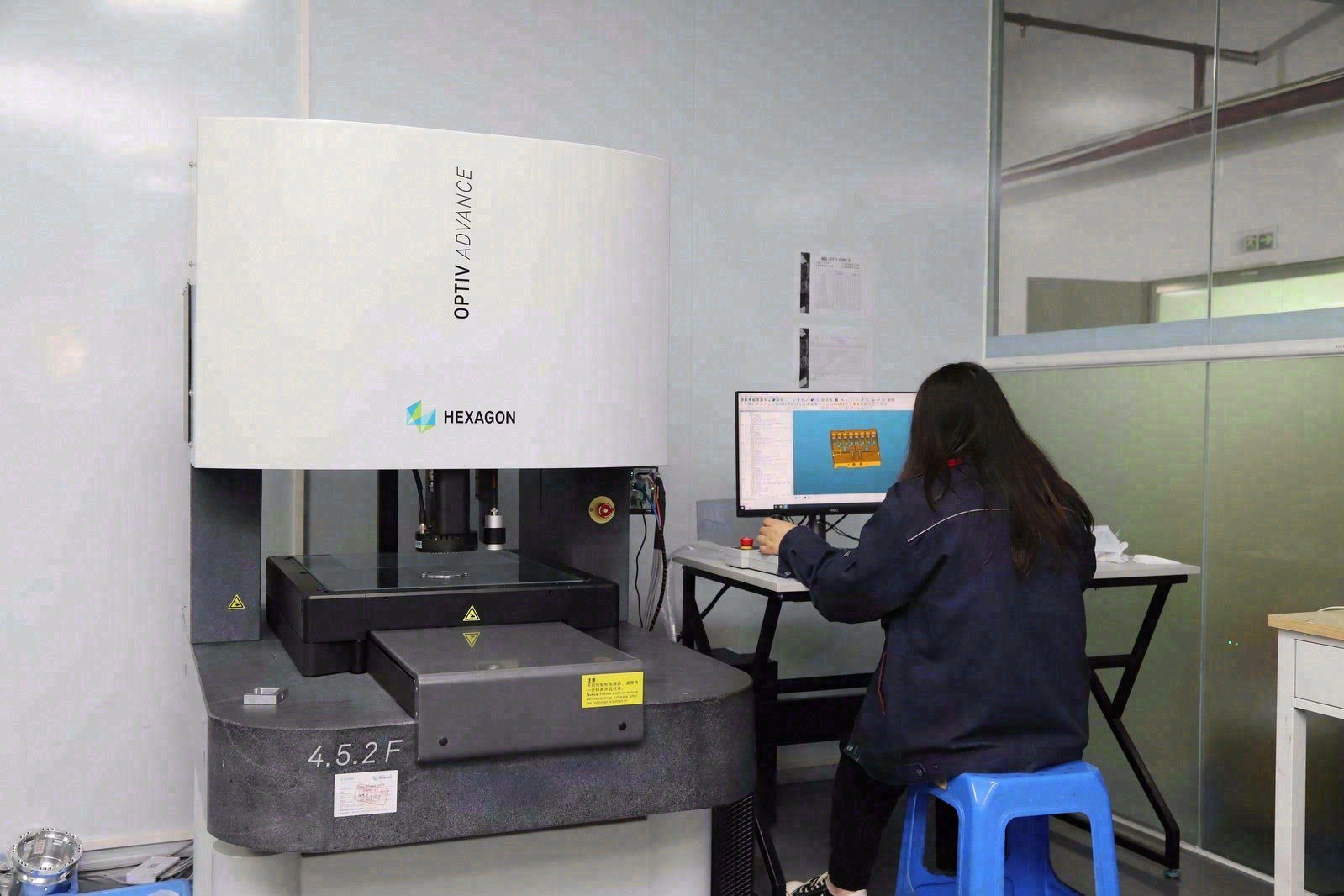
Every precision machined part is a material–process pair before it is a part: a metal or plastic joined to a way of making it, and the pair is what the quantity cost curve actually prices. At one piece, a pair built for zero setup wins; at a thousand, a pair built for amortized tooling starts to look different; at a hundred thousand, a pair built for a die or a mold takes the job entirely. This is why the same geometry can be cheapest as a CNC-machined part, a 3D-printed part, a casting, or an injection molding depending on the quantity column you are reading, and why asking "which process is better?" without naming the quantity is asking an unanswerable question. This guide pairs each alternative process with the quantity band where it genuinely wins, maps the material constraints that lock each pair in or out, and ends with a decision table you can read against your own order size. The starting point is the curve itself, because quantity decides which pair deserves the part.
Why is the material–process decision really a quantity decision?
Precision machining parts carry a distinctive cost shape: the first part is expensive, and the unit price falls as quantity climbs, because programming, tooling, workholding, and first-article inspection are paid once per order and then spread across more parts. Every alternative process has the same structure with a different curve. 3D printing charges near-zero setup and a high per-part cost, so its curve is almost flat — expensive at one piece and only marginally cheaper at a thousand. Injection molding inverts that: a costly mold up front, then a very low per-unit cost that only makes sense when the mold is amortized across enough parts. Casting and MIM sit between them, with moderate tooling and moderate per-part cost.
The decision table therefore has quantity as its first column, not an afterthought. A part that is genuinely a one-off prototype is, by the arithmetic of setup cost, almost always a machined or printed part. The same part at fifty thousand pieces is, by the same arithmetic, a candidate for a die or mold, and the machining quote that won at low volume is structurally unable to compete at high volume. The mistake is choosing a pair for the part without choosing it for the quantity. The quantity cost curve on this site's precision machining parts guide walks the full model in detail; this guide applies the same curve to the process decision itself.
Where does 3D printing genuinely win, and where does it lose to a machined part?
Additive manufacturing wins the parts that machining prices out of existence: low quantity, high complexity, and geometries no cutter can reach. At one to a few pieces, a printed part avoids the entire setup block — no programming for toolpaths, no fixturing, no tool selection — and can produce internal lattices, conformal channels, and undercuts that would require multiple machining setups or assembly. That is the honest territory of 3D printing, and within it the process is often the cheapest route to a working part.
The boundary is where material and precision requirements appear. Machined parts hold ±0.003 mm as a routine result and reach ±0.002 mm on precision-ground features, verified on a CMM; as-printed parts land in a looser band with a surface finish that usually needs machining anyway on functional faces. Metal 3D printing also carries a material reality: printed microstructure and properties differ from wrought bar, which matters when the part carries a load or a fatigue life. And the per-part cost of printing barely falls with quantity, so the moment an order grows past the prototype range, the flat curve loses to a process whose setup can be amortized. The rule of thumb: print the part you need once, or the geometry no cutter can make; machine the part you need at quantity, in a material whose properties you can verify.
When does a casting or MIM take the part, and what still has to be machined?
Casting and metal injection molding (MIM) are the volume processes for metal parts, and their entry point is set by tooling cost against order size. A cast or MIM part pays for a tool once, then reproduces the geometry cheaply, which is why the pair only becomes the winner when the order is large enough to amortize that tool. The crossover sits in a range that depends on part complexity and material, but the logic is constant: below the crossover, machining wins because the setup is cheaper than the tool; above it, the molded or cast process wins because the per-part cost is lower and the tool is now a sunk investment.
Two realities keep machining in the picture even after the crossover. First, casting and MIM produce near-net shapes, not finished features — bores, sealing faces, and tight tolerances still get machined, which is why a "cast part" is often a cast-and-machined part with the machining concentrated on the functional features. Second, the material and tolerance behavior differs: as-cast structure and MIM's sintered density are not identical to wrought bar, so the drawing's tolerance and material callouts must be read against the process that produces them. A buyer who moves a part from machining to MIM without revisiting the tolerance and material state is assuming the two processes produce the same thing, and they do not.
When does injection molding win a part that looked machined, and what do you give up?
Injection molding is the volume champion for plastics, and its win condition is purely quantitative: a mold that costs tens of thousands of dollars becomes economical only across a large production run. At that quantity the per-part price is dramatically lower than machining the same plastic part, and the mold can build in features — draft, ribs, snap fits, boss details — that a machining operation would have to cut separately. For a part that will run in tens of thousands, injection molding is not a compromise; it is the economically correct pair.
What the buyer gives up is dimensional and material flexibility. Injection-molded tolerances are looser than machined ones, because plastic shrinks as it cools and the shrinkage is never perfectly uniform across the part. A precision bore that a machined part holds at ±0.003 mm may need post-mold machining in an injection-molded part, or a redesign that accepts the molded band. And the mold itself is the trap: once built, it resists revision, so a design that is still changing should not be frozen into tooling. The disciplined path is to prototype and validate the geometry in machined parts first — at low volume, machining is cheaper than a mold anyway — and move to injection molding only when the design is stable and the volume justifies the tool.
How does the material–process decision change when precision is the point?
Precision parts add a constraint that the volume processes cannot always meet: the tolerance and finish live on machined features. A precision machined part carries its function in dimensions held to ±0.003 mm or ±0.002 mm, in surface finishes reached by defined operations, and in material properties verified from bar stock. Each alternative process trades some of that precision for its own economics:
- 3D printing trades precision and material properties for zero-setup geometry. Use it for one-offs and unreachable geometry; machine the functional faces or the properties will not match wrought material.
- Casting and MIM trade near-net shape and volume economics for finished-feature precision. The casting gets you the bulk shape at volume; the machine still makes the bores, seals, and tight tolerances.
- Injection molding trades tolerance and revision flexibility for the lowest plastic per-part cost at scale. Mold the body; machine the precision features; keep the design frozen before the tool is cut.
- Machining keeps the precision by keeping the process. Where the part's function lives in tight dimensions, verified material, and documented process capability, machining is not an alternative to reject — it is the process that makes the other processes' near-net shapes into finished parts.
The precision question therefore does not end when a part moves to a volume process. It moves with the functional features, which is why so many production parts are hybrids: cast or molded or printed for the bulk, then machined for the features that carry precision.
Which material–process pair wins your quantity? A decision table
The whole argument compresses into one table. Read down the left column for your order size and part type; the middle columns say what each pair costs and delivers; the last column names the pair that wins at that quantity.
| Quantity and part type | CNC machining | 3D printing | Casting / MIM | Injection molding | Winner, and why |
|---|---|---|---|---|---|
| One prototype, any geometry | Full setup cost on one part | Near-zero setup; prints in days | Tool cost impossible at this volume | Mold cost impossible at this volume | Machining or 3D printing. Print if the geometry is unreachable by a cutter; machine if material or precision matters |
| Tens of parts, precision features | Setup amortized across tens; holds ±0.003 mm | Per-part cost stays high; finish needs machining | Tool still too costly | Mold still too costly | Machining. The setup is now spread enough, and the precision features demand the process |
| Hundreds to low thousands, metal | Setup fully amortized; competitive per part | Flat high per-part cost loses | Tool cost now amortizable; near-net shape | Plastics only | Machining or casting, by geometry. Complex near-net shapes move to casting; precision stays machined |
| High thousands, plastic | Per-part cost high at scale | Flat cost loses badly | Metal only | Mold amortized; lowest per-part cost | Injection molding, if the design is frozen. Prototype the geometry machined first |
| Production with hybrid features | Machines the functional features | — | Supplies the bulk near-net shape | Supplies the plastic bulk | Hybrid: bulk from the volume process, precision features machined on top |
Read the table once more and the pattern is clear: machining wins every quantity where precision or material verification is the point and the setup can be amortized, 3D printing wins the true one-offs and unreachable geometry, and the mold-and-die processes win only when volume justifies the tool. The factory behind this site runs the machining side of every row — from one prototype at an order quantity of one piece up to full production runs, with XRF material verification and process capability tracked on the floor. Its precision machining parts factory page shows the equipment ladder behind that range, and the machining services page covers the process options that keep precision work in-house while volume processes supply the bulk.
How do you write the winning pair into an RFQ so every quote prices the same part?
The process decision is only useful if the RFQ makes the pair explicit, because a machining quote, a casting quote, and a molding quote for "the same part" are not quoting the same thing. Three lines in the inquiry close the gap:
1. Name the quantity band and the program stage. State whether this order is a prototype, a validation run, or a production release, and give the target annual volume. The supplier needs the quantity to route the part correctly; a quote priced without the volume band is a quote for an unspecified part.
2. Name the material and the state, and the process that produces it. Wrought bar machined to ±0.003 mm is a different product from a MIM near-net shape with machined features, which is different again from a molded plastic body. Write the material designation, the condition, and the process route so the quote prices the pair you intend, and so a supplier can tell you when the pair you named does not fit the quantity.
3. State which features carry precision. If the part's function lives in bores, sealing faces, and locating surfaces, say so, and name the tolerance each carries. The supplier then quotes the precision features as machined operations regardless of which process supplies the bulk, and the quote shows the hybrid honestly instead of hiding the machining in a footnote.
Bring those three lines to the RFQ and every quote answers for the same part at the same quantity. The companion guides on this site — the quality control process and the lead-time guide — cover the measurement and schedule side of the same quantity decision; this guide covers the process side, the choice of which pair deserves the part at your volume.
Frequently Asked Questions
Is 3D printing cheaper than CNC machining for prototypes?
Often, yes — for a one-off, printing avoids the entire setup block: no programming, fixturing, or tool selection, and the part can ship in days. The catch is precision and material: as-printed parts land in a looser tolerance band with a finish that usually needs machining on functional faces, and printed metal properties differ from wrought bar. Print one-offs and unreachable geometry; machine when precision or material verification matters.
When does casting or MIM become cheaper than machining?
When the order is large enough to amortize the tool cost. Below the crossover, machining wins because its setup is cheaper than a tool; above it, the cast or MIM part wins because its per-part cost is lower. The crossover depends on part complexity and material, so the supplier should be asked to show it rather than guess at it.
Can a cast or MIM part hold the same tolerances as a machined one?
Not on the as-formed features. Casting and MIM produce near-net shapes; bores, sealing faces, and tight tolerances still get machined afterward. A production part is therefore often a hybrid — the bulk from the volume process, the precision features machined on top — and the drawing should state which features carry which process.
Should I move my machined plastic part to injection molding?
Only when the design is frozen and the volume justifies the mold. Injection molding gives the lowest per-part cost for plastics at scale, but the mold is a sunk investment that resists revision, and molded tolerances are looser than machined ones because plastic shrinks as it cools. Prototype and validate the geometry in machined parts first, then move to molding at volume.
Why does the same part have a different "best process" at different quantities?
Because every process has a setup-versus-per-part structure with a different curve. Machining and printing start cheap on setup but differ on per-part cost; molding and casting charge heavily up front and cheaply per part. The process whose total cost is lowest changes as quantity changes, so the quantity band belongs in the decision before the process name.
What tolerances can a precision machining service hold?
±0.003 mm on critical milled and turned features, verified by in-house CMM inspection, with precision-ground surfaces such as bearing seats and seal faces taken to ±0.002 mm. These are production tolerances held to process capability — Cpk at 1.67 or higher on key characteristics — not best-case single-part results.
How do I get a quote that compares machining against alternatives fairly?
Put the quantity band, the material and its state, and the precision features on the RFQ, and ask each process supplier to quote that exact scope. A machining quote, a casting quote, and a molding quote for "the same part" are not quoting the same thing unless the pair and the volume are named.
Need to know which material–process pair wins at your quantity before you pay for the wrong one?
Send the drawing, the target volume, and the precision features to [email protected] or call +86 13126536955. You will get a read on where machining wins at your quantity, and which alternative pair would take the part at another.